
Peer-Reviewed Journal Articles

Exploring gender-based violence experiences of LGBTQIA+ migrant youth in Canada
LGBTQIA+ migrant youth face elevated risks of gender-based violence (GBV), yet little research has examined their experiences in Canada. This exploratory study investigates forms of violence experienced by LGBTQIA+ migrant youth aged 15–24 and how these experiences vary across demographic characteristics. Survey data were collected in 2024 through a national community-based project, with 85 youth recruited online through newcomer- and LGBTQIA+-serving organizations. Measures included physical, sexual, emotional, stalking, and online abuse. Findings show high levels of multidimensional violence, with many participants experiencing multiple forms of abuse. Differences across gender, sexuality, migration status, and region of origin highlight how intersecting identities shape risk. The study provides early quantitative evidence on GBV among LGBTQIA+ migrant youth in Canada and points to the need for targeted policies, prevention strategies, and services.

Supporting Newcomer Youth in the Canadian Settlement Sector: Evaluation of an Online Employment Program for Newcomer Youth
This study looked at an online employment program for newcomer youth run by an immigrant-serving organization. The program combined digital marketing training with an internship to help participants build skills and improve their chances of finding work. Using surveys and staff interviews, the study found that the program increased participants’ skills, confidence, and employability. Staff also said the online format made the program more accessible, but some challenges remained, such as digital literacy and technology issues. Overall, the program had a positive impact, while showing that strong digital access and better participant engagement are important for success.

Community Steered Research: A Conceptual Model for Tackling Power Symmetries, Cognitive Justice, and Integrated Knowledge in Research.
This article introduces the Community Steered Research (CSR) model developed through the TIES Centre for Immigrant Research, highlighting community-led approaches to knowledge production, cognitive justice, and evidence-based research in the immigrant settlement sector.

Exploring language teachers’ perspectives on hybrid delivery with adult literacy learners: A participatory approach to developing a teacher toolkit
This study examines the challenges literacy instructors face in supporting adult English learners with low education, limited English, and low digital literacy. Using a participatory approach, the researchers worked with educators to co-design and test a teacher toolkit that helps instructors use technology and hybrid teaching more effectively.

Collaborative approaches to crisis intervention: Enhancing mental health support for newcomers
As part of BENCH, This study aims to investigate the barriers faced by newcomers in Canada in accessing mental health and crisis intervention services, focusing on immigrant and racialized communities. It explores service models that integrate newcomer support organizations with mental health services to address these challenges.

An environmental scan of the immigrant-serving sector in Calgary: Core-periphery model
Part of Environmental Scan and Systems Mapping of Services for Newcomers in Calgary study. The integration of immigrants into Canadian society is critical for addressing labor shortages and fostering economic growth, particularly in cities like Calgary where immigrant populations are rapidly increasing. This study conducted an environmental scan of Calgary's immigrant-serving sector, revealing a core-periphery model where a small number of organizations dominate service provision, highlighting both strengths and untapped potential for collaboration and resource access within the sector.

Storytelling with refugee families towards a pluriversal vision of sustainable futures
This study shows that ideas about sustainability are often shaped by Western views, while the knowledge of historically marginalized people is overlooked. Based on interviews with Syrian and Sudanese farming families in Calgary, it highlights how their lived knowledge and relationship with the environment can support broader and more diverse visions of sustainability.
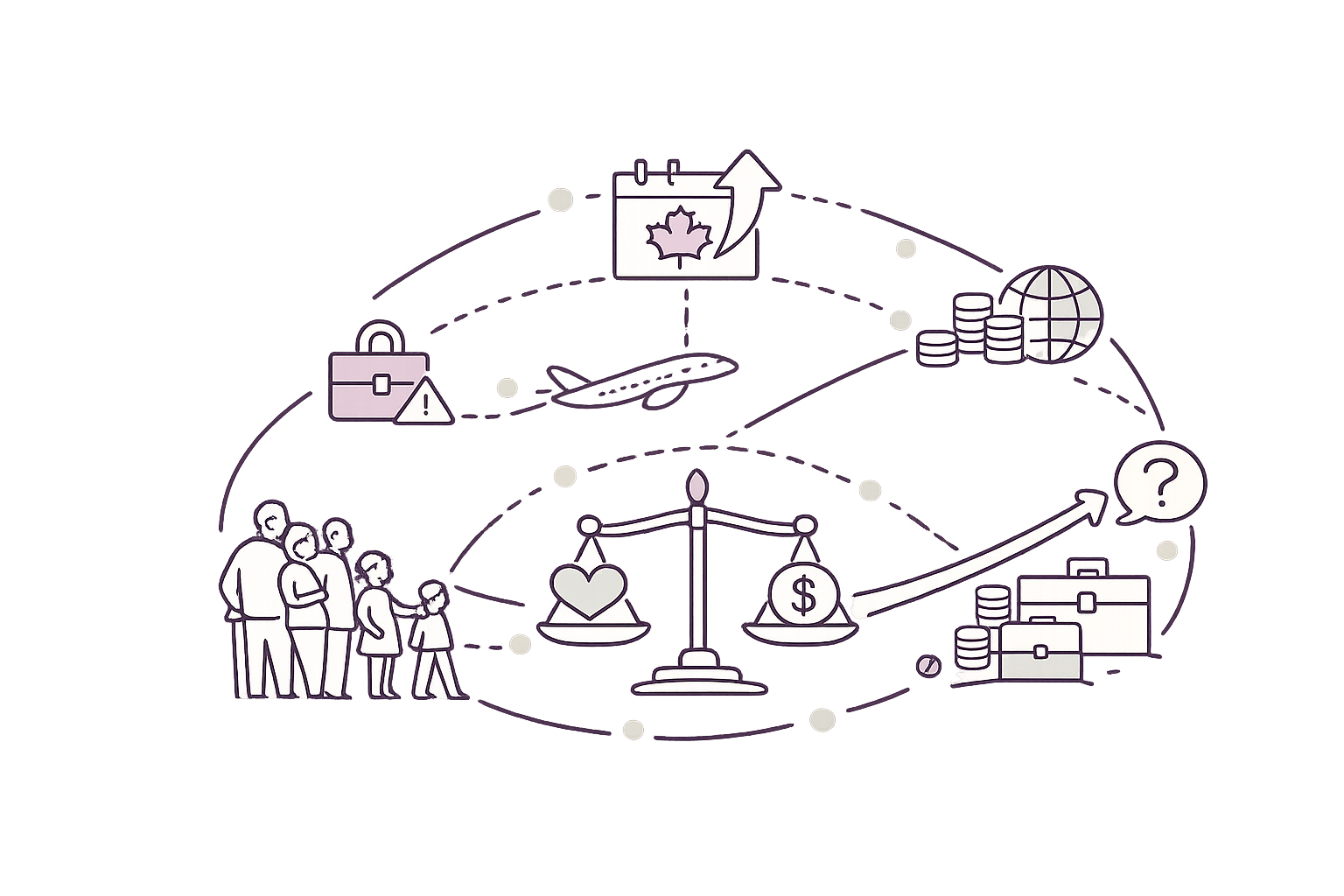
Environmental scan and systems mapping of newcomer services in Calgary
This article summary is part of the Environmental Scan and Systems Mapping of Services for Newcomers in Calgary study. It shows that Calgary’s newcomer-serving sector has a core-periphery structure, where the Big 8 settlement organizations deliver most services and hold more influence.
It also highlights that smaller organizations, ethnic-based groups, schools, health groups, and informal networks are important but underused. The text calls for more holistic and collaborative service planning, especially in areas like mental health, health, translation, and interpretation.

In/visible pandemic disruptions to immigrant integration: Social connections, impacts, and service use during the COVID-19 pandemic.
This study, part of Calgary Newcomers Collaborative (CNC), shows that COVID-19 affected racialized immigrant communities in especially unequal ways. Based on data from Calgary, it found that the pandemic disrupted immigrants’ employment, education, and health partly because it also weakened their social connections, especially their links to public services.


